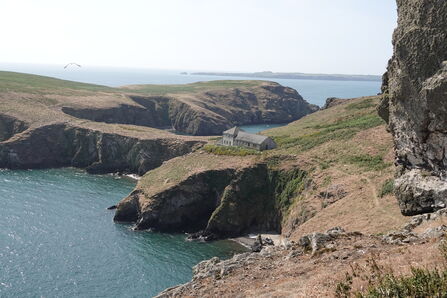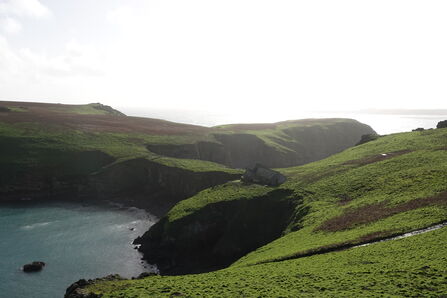

Extreme weather has been impossible to ignore this summer. Heatwaves on repeat, plants brown when they should be at their greenest, and an uncharacteristic dryness across Wales. As I write this in August, some trees clearly think it’s already autumn. A slightly unsettling sight.
At the end of July, Natural Resources Wales declared drought across the whole of the country. The devastating impacts of wildfires have (quite rightly, in my opinion) dominated headlines over the past few months. With those pictures at the forefront of my mind, I spoke to some of our team about the challenges they’ve faced this summer. The team had lots of stories to share - most were less obvious than the wildfire pictures in my mind, and some quite unexpected to me.
Lizzie, our Head of Terrestrial Nature Reserves, shared how the dry conditions have added an extra level of difficulty to her surveys:
"The vegetation is totally burned off by the sun, really early, on some of our sites. Alice (Conservation Officer) and I were trying to do botanical monitoring on the South Gower Coast. It was really hard because the coastal calcareous grassland was - well, a lot of it - fried to a crisp. We got quite good at crispy species ID by the end!"
Lizzie highlighted how heatwaves and drought add extra pressure to wildlife, which is already under strain. There’s a bigger risk of accidental fires, particularly on our reserves which are popular with walkers. And erosion is a big issue. This heat exacerbates erosion and loss of plant cover in high footfall areas, where the ground gets really dry and dusty. Long term, we could see impacts on the seed bank and the survival of some more drought-susceptible species. If plants regularly ‘fry’ before they setting seed, how will they come back year after year? Plus, we know that some invertebrates are negatively affected by heatwaves, which might impact their role in pollination.